
A cavity can form in a baby tooth in under two years, sometimes even faster, and most parents never see it coming until it’s already painful. Here’s what actually causes it, straight from a pediatric dentist in Burlington who sees this daily.
The Surprising Truth About Cavities in Toddlers
Baby teeth can decay faster than adult teeth, and most parents have no idea why. It sounds backward at first, since baby teeth eventually fall out anyway. But the enamel on primary teeth is actually thinner than permanent teeth, which means bacteria and acid break through it much quicker.
A cavity that would take years to form in an adult tooth can develop in a toddler’s mouth in a matter of months. Any pediatric dentist in Hudson will tell you the same thing: catching this early makes all the difference.
Why Baby Teeth Decay So Easily
Primary teeth have a thinner layer of enamel protecting the softer dentin underneath. Once bacteria break through that thin layer, decay spreads noticeably faster than it would in an adult mouth. Add in the fact that toddlers often can’t brush effectively on their own yet, and you’ve got a recipe for rapid cavity growth. This isn’t a sign of bad parenting either; it’s simply how young teeth are built.
The Real Process Behind Tooth Decay
Cavities don’t just appear overnight, though it can feel that way. The process starts when bacteria in the mouth feed on sugars and starches left behind from food or drinks. These bacteria then produce acid as a byproduct, and that acid slowly eats away at the enamel surface. Over time, this creates tiny holes that grow larger if nothing interrupts the cycle.
- Sugar and starch particles stick to teeth after meals and snacks
- Bacteria in plaque convert these particles into acid within minutes
- That acid weakens enamel, creating small pits that expand gradually
- Without cleaning or fluoride exposure, these pits deepen into full cavities
Bottle Feeding and Nighttime Habits
One of the biggest contributors to early childhood cavities is falling asleep with a bottle of milk or juice. Liquid pools around the teeth for hours during sleep, giving bacteria constant fuel to produce acid all night long. This pattern often leads to what dentists call baby bottle tooth decay, which usually affects the front teeth first.
Switching to water in nighttime bottles, or stopping bottle use before bed entirely, dramatically lowers this risk.
Sippy Cups Aren’t Automatically Safer
Parents often assume sippy cups solve the bottle problem, but that’s not always true. If a sippy cup contains juice or milk and gets sipped throughout the day rather than during set mealtimes, it creates the same constant sugar exposure.
Constant sipping means teeth rarely get a break from acid attacks. Limiting sippy cup use to mealtimes, and filling it mostly with water otherwise, helps break this cycle.
Diet Choices That Speed Up Decay
Certain foods and drinks are far more cavity-prone than others, and it’s not always the obvious candy culprits. Sticky, starchy snacks can actually cause more damage than a quick piece of chocolate, since they cling to teeth longer.
- Gummy snacks and fruit snacks that stick between teeth for extended periods
- Crackers and chips that break down into starch and linger on tooth surfaces
- Fruit juice, even the natural kind, due to its high sugar concentration
- Frequent snacking throughout the day instead of set meal times
Genetics and Saliva Play a Role Too
Not every cavity comes down to diet or brushing habits alone. Some kids naturally produce less saliva, which normally helps wash away food particles and neutralize acid. Enamel strength can also vary slightly from child to child due to genetics. This is exactly why two siblings with similar diets sometimes end up with completely different cavity histories.
Fluoride’s Role in Prevention
Fluoride works by strengthening enamel and helping it resist acid attacks from bacteria. It can even help reverse very early stages of decay before a full cavity forms.
Many pediatric dental offices apply fluoride varnish during routine checkups for exactly this reason. Community water fluoridation, fluoride toothpaste, and professional treatments all work together to give young teeth extra protection.
When to Start Brushing and How
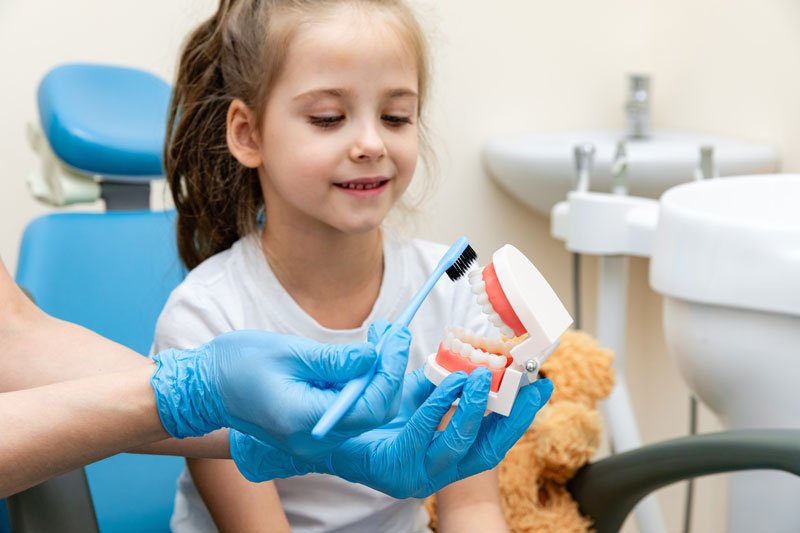
Oral care should actually begin before the first tooth even appears, using a soft, damp cloth to wipe a baby’s gums after feeding. Once teeth emerge, a rice-grain-sized amount of fluoride toothpaste on a small, soft-bristled brush becomes the standard.
Most toddlers need help brushing until around age six or seven, since fine motor control for thorough brushing develops slowly. Parents should always finish the job after a child’s own attempt, at least once daily.
Why Early Dental Visits Matter So Much
Waiting until a child complains of pain before visiting a dentist is one of the most common mistakes parents make. By that point, decay has usually progressed significantly.
A pediatric dentist in Nashua typically recommends a first visit by age one, or within six months of the first tooth appearing. This early checkup allows small issues to get caught and treated before they turn into painful, expensive problems.
Frequently Asked Questions About Baby Teeth and Cavities
Q1. At what age do cavities usually start forming in babies?
A1. Cavities can start as early as twelve to eighteen months, especially if a child regularly falls asleep with a bottle of milk or juice still in their mouth.
Q2. Can a cavity in a baby tooth actually hurt the permanent tooth underneath?
A2. Yes, untreated decay can spread downward and affect the developing permanent tooth below, sometimes causing damage or discoloration before that adult tooth even erupts fully.
Q3. Is it necessary to fix cavities in baby teeth if they’ll fall out anyway?
A3. Absolutely, since untreated decay causes pain, infection, and can affect how permanent teeth come in properly, sometimes shifting their position or timing entirely.
Q4. How often should toddlers visit a pediatric dentist?
A4. Every six months is standard, though some children need more frequent visits based on their individual cavity risk, enamel strength, and overall oral hygiene habits.
Q5. Does breastfeeding at night cause cavities the same way bottles do?
A5. It can, especially past the first year, since breastmilk also contains natural sugars that feed decay-causing bacteria if teeth aren’t cleaned afterward.
Q6. Are fluoride treatments safe for very young children?
A6. Yes, fluoride varnish applied by a dentist uses a small, carefully measured amount that’s completely safe for toddlers and helps strengthen developing enamel.
Q7. What’s the earliest sign of a cavity parents should watch for?
A7. White or chalky spots on teeth often appear first, signaling early enamel weakening well before any visible hole or dark spot actually forms.
Q8. Can diet alone prevent cavities without good brushing habits?
A8. No, diet and brushing work together, since even healthy foods leave residue behind that needs to get cleaned off regularly to avoid decay.
The Habit That Actually Protects Your Child’s Smile
A toothbrush alone was never going to be enough, and that’s the part most parents don’t realize until a dentist points it out. What actually stops decay is a combination of things: watching bedtime bottle habits, limiting sugary snacks between meals, and getting a child into a dental chair before any problem shows up on its own.
We treat every visit at Greenwood Dental Partners as a chance to catch something small before it turns into something a child has to feel.
Plenty of the tiny white spots we’ve spotted over the years never became actual cavities, purely because a parent didn’t wait for a complaint before booking a visit. So if you’re looking for a pediatric dentist in Burlington who’d rather prevent a problem than fix one later, we’re ready whenever you are.