
The jawbone under a missing tooth starts changing within weeks. A tooth root gives the surrounding bone a reason to stay, and once the root is gone, the body begins to reabsorb some of that bone. That is the part of tooth loss most people never hear about, and it shapes almost every decision that follows.
This guide walks through what happens after a tooth is lost, the different ways dental implants can replace one tooth or a full set, how long implants tend to last, and what drives the cost.
What Happens to the Bone After a Tooth Comes Out
A 2012 systematic review in Clinical Oral Implants Research pulled together 20 studies on how the jaw changes after an extraction. Within six months, the ridge of bone lost 29% to 63% of its width and 11% to 22% of its height. Most of that change happened in the first three to six months, then slowed.
Those numbers explain a lot. Less bone can mean a shorter implant, a different position, or a bone graft before an implant can be placed. It is also why timing gets discussed so carefully. We cover that question in more depth in our post on why a dentist might recommend waiting before placing an implant after extraction.
The Implant Options, Side by Side
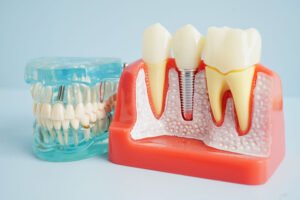
An implant is a small post placed in the jawbone that the bone grows around over time. What sits on top of it depends on how many teeth are missing.
Single implant: One post, one crown. It replaces a single tooth without involving the neighbors, which is the main difference from a traditional bridge. A bridge needs the teeth on either side shaved down to hold it.
Implant-supported bridge: When several teeth in a row are missing, two or more implants can support a bridge across the gap. You get multiple replacement teeth without needing an implant for each one.
Removable implant-supported denture: Implants act as anchors that a denture snaps onto. It comes out for cleaning, but it stays put while you eat and talk far better than a denture that relies on suction alone. People frustrated with a loose lower denture often look at this first.
Fixed full-arch implants: A complete arch of teeth is attached to a set of implants and stays in place. All-on-4 is one version of this. The number of implants, usually four to six, is chosen after an evaluation of bone health, jaw structure, bite forces and spacing. Some fixed arches are made as zirconia fixed bridges.
If you’re weighing a removable option against a fixed one, our page on fixed vs removable teeth lays out the trade-offs. For full-arch candidacy specifically, see who may be a candidate for All-on-X dental implants.
Implants aren’t the only answer, and a fair consultation should say so. Traditional bridges and full or partial dentures still make sense for some patients, depending on health, budget and the condition of the remaining teeth.
How Long Do Dental Implants Last?
A 2019 systematic review in the Journal of Dentistry looked at 18 studies of modern implants followed for ten years. The summary estimate for implant survival at ten years was 96.4%.
The authors then ran a more cautious analysis that accounted for patients who dropped out of follow-up. That figure was 93.2%, and it suggested the risk of losing an implant may be roughly double in patients aged 65 and older. Those are still strong numbers, but they are averages from studies, not a promise about any one mouth.
What tips the odds in your favor is mostly routine. Implants can’t get cavities, yet the gum and bone around them can become inflamed and infected much like natural teeth. Daily cleaning and regular professional maintenance matter just as much after treatment as before it.
How Treatment Gets Planned
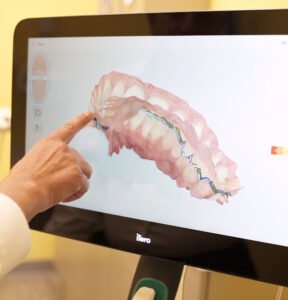
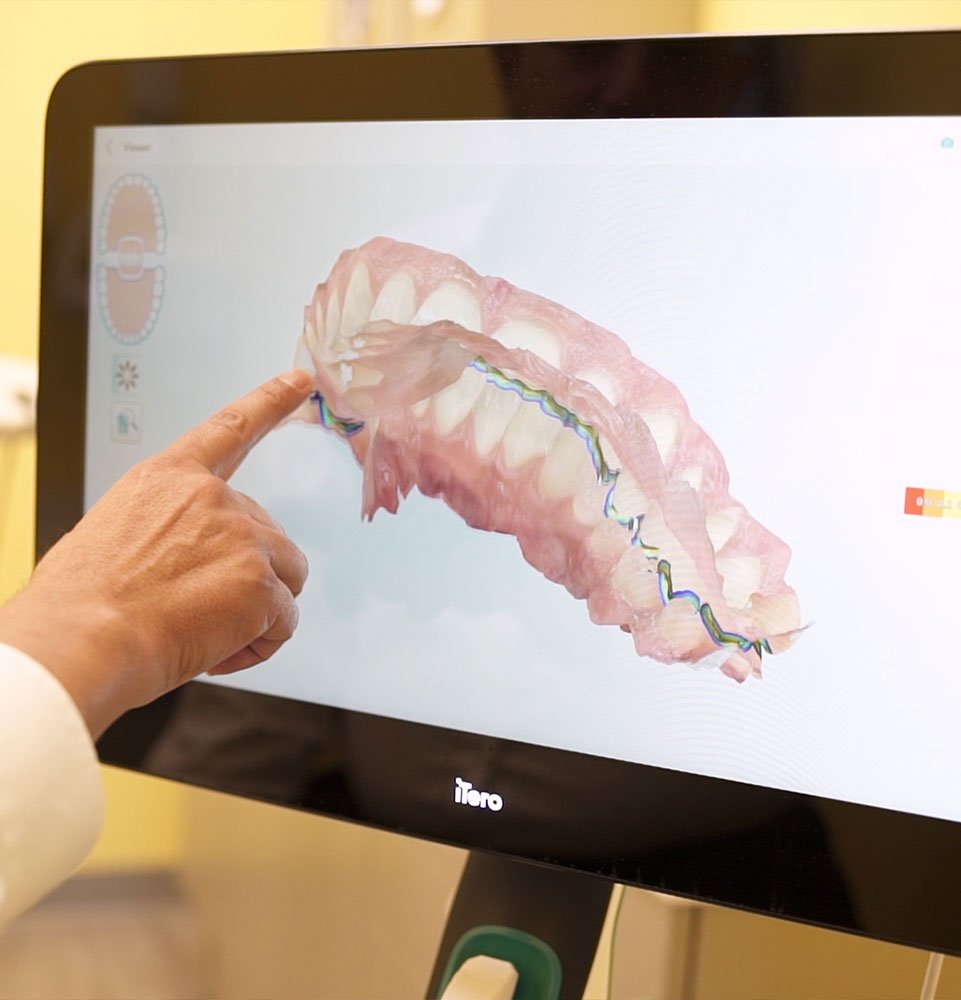
Good implant outcomes start well before surgery. The American Academy of Oral and Maxillofacial Radiology recommends cross-sectional imaging for every potential implant site and names cone beam CT (CBCT), a type of 3D x-ray, as the method of choice. A 3D scan shows bone width and height, the position of nerves and sinuses, and where an implant can safely go. Patients considering dental implants in Burlington can have this scan at our Second Avenue office instead of being sent elsewhere for imaging.
Your general health is part of the plan too. Diabetes doesn’t automatically rule anyone out, but poorly controlled blood sugar can make healing less predictable. Smoking, certain medications and active gum disease all affect timing and approach. Gum disease, in particular, is usually treated before any implant goes in.
Implant treatment involves surgery followed by a healing period while the bone bonds to the implant. How long that takes depends on your bone, the need for grafting, and which restoration you’re getting. A realistic timeline should come from your own scans and exam, not a general estimate.
What Affects the Cost?
There’s no single price for implants because there’s no single treatment. Cost depends on the number of implants, case complexity, the materials used for the final teeth, and any bone grafting or extractions needed. Recommendations should be guided by what’s medically appropriate, not by price.
Several ways to pay can help with larger cases:
- CareCredit offers no-interest promotional plans of 6 to 24 months when paid in full by the end of the term, plus longer-term options
- Proceed Finance offers fixed-rate loans from $2,500 to $75,000
- Cherry offers plans from 3 to 60 months, some interest-free, with a soft credit check
- Sunbit splits treatment into smaller monthly payments
Dental insurance may cover part of the treatment depending on your plan, and the insurance coordinator can check your benefits before you commit.
Questions Worth Bringing to Your Consultation
An implant consultation is the time to ask anything that would change your decision. A few that tend to be useful:
- Do I have enough bone, or will I need a graft?
- Which option fits my situation, and why not the others?
- What will I have in my mouth while the implants heal?
- What maintenance will I need afterward?
- What does the total cost include?
Implant Questions Patients Ask Us
Q1. Do I need to replace a missing back tooth if no one can see the gap?
A1. It’s worth discussing even if appearance isn’t a concern. Bone at an extraction site shrinks most in the first three to six months, and that can limit options later.
Q2. How long do dental implants last?
A2. In a 2019 review of 18 long-term studies, about 96.4% of implants were still in place after ten years. A more cautious analysis put the figure at 93.2%, with higher risk in patients 65 and older. Home care and regular maintenance make a real difference.
Q3. Can I get implants if I have diabetes?
A3. Diabetes does not automatically rule you out. Poorly controlled blood sugar can make healing less predictable, so your overall health is reviewed carefully during planning.
Q4. What is the difference between All-on-4 and other full-arch implants?
A4. All-on-4 refers to a fixed full arch supported by four implants. Some patients need five or six, depending on bone, bite forces and spacing. The number is chosen after a clinical evaluation and 3D imaging.
Q5. Is a removable implant denture better than a regular denture?
A5. For many people, yes, because implants hold the denture in place while eating and speaking. It still comes out for cleaning, which some patients prefer.
Q6. Why do I need a 3D scan before implants?
A6. A 3D scan shows bone volume and the location of nerves and sinuses. The American Academy of Oral and Maxillofacial Radiology recommends cross-sectional imaging, ideally CBCT, for every implant site.
Q7. How much do dental implants cost?
A7. It depends on how many implants you need, the type of final teeth, the materials, and any grafting or extractions involved. You’ll get a figure based on your own exam and imaging.
Q8. Can implants fail?
A8. They can, though it’s uncommon. Gum infection around the implant, smoking, uncontrolled health conditions and heavy grinding all raise the risk. If an implant crown ever feels loose, read our post on what a loose implant crown can mean and call the office.
The Takeaway
If a tooth has recently come out, or is about to, have the implant conversation sooner rather than later. The bone keeps changing in those first months, and options that are simple now can need extra steps a year from now.