

Most people arrive at a cosmetic consultation with a photo of someone else’s smile. A more useful starting point is the one detail that bothers you when you look in the mirror. Yellowing, a chipped front tooth and crowded lower teeth each lead to a different treatment, and picking the wrong one can cost money without fixing what you actually notice.
That’s how we approach cosmetic dentistry at our Burlington office: start from the problem, then choose the treatment. Below is how that works for the most common concerns, along with what the research says about how each option holds up.
When the Problem Is Color
Teeth darken for two broad reasons. Surface stains come from coffee, tea, red wine, berries and tobacco. Deeper discoloration sits inside the tooth and can come from aging, certain medications, excess fluoride during childhood, or an old injury.
Professional teeth whitening uses hydrogen peroxide or carbamide peroxide to lighten the tooth itself. It tends to work best on yellowing from age and food. Gray or brown stains from medications or fluorosis often respond less predictably, which is worth knowing before you spend money on several rounds.
Sensitivity is the side effect people ask about most. Gum irritation and tooth sensitivity are the most common side effects of peroxide bleaching, according to Cedars-Sinai’s patient guidance. A study published in the Journal of the American Dental Association found that 54% of people using a home whitening gel reported mild sensitivity after the first week. Interestingly, the same share of people using a placebo gel reported it too, and by the end of the study only 8% of the whitening group still noticed any.
One detail changes the order of treatment for many patients: whitening does not change the color of crowns, veneers or tooth-colored fillings. If you plan to replace an old crown and also want brighter teeth, whitening usually comes first so the new crown can be matched to your new shade.
When the Problem Is Shape, Chips or Small Gaps
Porcelain veneers are thin ceramic shells bonded to the front of teeth. They can cover chips, close small gaps, even out uneven edges and mask stains that bleaching can’t reach.
How long do they last? A 2016 systematic review in the International Journal of Prosthodontics pooled 13 clinical studies and estimated an overall survival rate of 89% over a median follow-up of nine years. Glass-ceramic veneers came in at 94% and feldspathic porcelain at 87%. Fracture or chipping was the most common problem, at about 4%, followed by debonding at about 2%.
Two things are worth weighing honestly. Preparing a tooth for a veneer usually removes a thin layer of enamel, and that enamel does not grow back, so the decision is permanent. And if you clench or grind, tell your dentist before treatment. That force is hard on porcelain, and it may need attention first through TMJ treatment.
When the Problem Is Crowding or Crooked Teeth
Veneers can disguise a slightly rotated tooth, but they don’t move anything. For crowding, overlapping or spacing that comes from tooth position, Invisalign clear aligners treat the cause.
Aligners only work while they are in your mouth. Most treatment plans call for wearing them around 20 to 22 hours a day and taking them out only to eat, drink anything other than water, and clean your teeth. Patients who wear them less often find that treatment runs longer than planned.
Straightening first also tends to make any later cosmetic work more conservative. Teeth in a better position need less reshaping.
When Teeth Are Broken, Worn Down or Heavily Filled
A tooth that is cracked, badly worn or held together mostly by old filling material often needs more protection than a veneer can give. Porcelain crowns cover the whole visible tooth, which restores strength as well as appearance. A bridge can replace one missing tooth by anchoring to the teeth on either side.
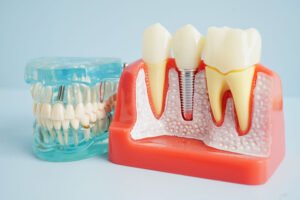
If a tooth is already gone, a dental implant is another route, and it doesn’t rely on the neighboring teeth for support.
When Several Things Bother You at Once
Very few smiles have just one issue. A smile makeover combines treatments, and the order matters as much as the choices.
Health comes before appearance. Cavities and gum disease need treatment first, because cosmetic work placed on unhealthy teeth or gums won’t last. After that, the usual sequence moves from alignment to whitening and then to crowns or veneers, so each step sets up the next. Skipping ahead can mean redoing work later.
Our office also offers Botox and Jeuveau as part of cosmetic care. Ask about them at your consultation if facial lines are on your list too.
Paying for Cosmetic Work
Insurance plans often treat purely cosmetic procedures differently from restorative care, so check your benefits early. Payment for cosmetic and restorative treatment is due at the time of service. Financing through CareCredit, Sunbit and Cherry can spread the cost over monthly payments, and patients on the in-house membership plan receive 15% off treatment beyond their included visits.
A good cosmetic dentist should be able to show you why one option fits your teeth better than another, including when the simpler and cheaper choice is the right one.
Cosmetic Dentistry Questions We Hear Often
Q1. Will whitening work on my crowns or veneers?
A1. No. Whitening agents lighten natural tooth structure, not porcelain or composite. If you want whiter teeth and new restorations, whitening usually comes first so the new work can be matched to the lighter shade.
Q2. Does professional whitening make teeth sensitive?
A2. It can. Sensitivity and gum irritation are the most common side effects, and they are usually temporary. Research published in JADA found sensitivity faded as treatment went on, and most participants finished the full course.
Q3. How long do porcelain veneers last?
A3. A 2016 review of 13 studies estimated about 89% survival over a median of nine years. Chipping or fracture was the most common complication. Grinding habits and how you care for your teeth both affect how long yours last.
Q4. Are veneers reversible?
A4. Usually not. Most veneers require removing a thin layer of enamel, and that enamel doesn’t come back. Plan to maintain or replace veneers over your lifetime once you have them.
Q5. Can veneers fix crooked teeth?
A5. They can hide mild unevenness, but they don’t move teeth. For crowding or spacing caused by tooth position, clear aligners such as Invisalign correct the underlying problem.
Q6. How many hours a day do Invisalign aligners need to be worn?
A6. Most plans call for around 20 to 22 hours a day. Wearing them less tends to slow treatment.
Q7. Can I combine several cosmetic treatments?
A7. Yes, and many patients do. The sequence matters: treat decay and gum problems first, then alignment, then whitening, then crowns or veneers.
Q8. Is cosmetic dentistry covered by insurance?
A8. Coverage varies, and purely cosmetic treatment often isn’t covered. Financing through CareCredit, Sunbit or Cherry and the in-house membership discount can help with costs.
The Short Version
Name the one thing you’d change first. Color points toward whitening, shape and chips toward veneers, position toward aligners, and broken or worn teeth toward crowns. Whoever you see should be willing to talk you out of a treatment as readily as into one.