
Most people focus on getting dental implants and forget that tooth alignment plays a huge role in whether those implants succeed long-term. If your teeth are crowded, shifted, or misaligned, placing an implant first can create serious problems down the line. Getting the sequence right isn’t just a preference; it’s a clinical necessity. Finding the best dentist in Nashua, NH, means working with someone who maps out your full treatment plan before a single implant is placed.
The Connection Between Alignment and Implant Success
Dental implants are one of the most reliable tooth replacement options available today. But here’s something most patients don’t hear upfront: the success of an implant depends heavily on what’s happening around it. If your surrounding teeth are crooked, crowded, or sitting at odd angles, those conditions directly affect where an implant can be placed and how well it holds up over time.
Teeth don’t stay still after one is lost. They drift and tilt toward the empty space, sometimes within just a few months. If orthodontic treatment isn’t done first, an implant may end up in a position that doesn’t align properly with your bite. That misalignment puts excess pressure on the implant, which can lead to failure over time.
Why Implants Can’t Be Moved Like Natural Teeth
This is the part most patients are surprised to learn. Natural teeth can be shifted with braces or clear aligners because they sit in a periodontal ligament, a small layer of tissue that allows controlled movement.
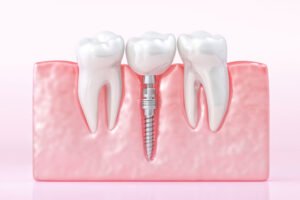
An implant, once fused to the jawbone through osseointegration, has no such ligament. It becomes a fixed part of the bone itself. That means if you get an implant first and then decide to straighten your teeth later, the implant won’t move with your other teeth.
Orthodontic treatment would shift everything around it, leaving the implant in the wrong position. In some cases, that implant may need to be removed entirely, which is an expensive and avoidable problem.
The Ideal Treatment Sequence Explained
Most experienced dental professionals follow a clear order when a patient needs both orthodontic work and implants. Understanding this sequence helps patients set realistic expectations and avoid costly mistakes.
The general order looks like this:
- Orthodontic treatment comes first to align existing teeth and open the correct space for the implant
- Bone grafting is done if needed, once the teeth are in the right position
- The implant post is placed and given time to fuse with the jawbone, usually three to six months
- The final crown is attached once the implant has fully integrated
Skipping the first step and placing the implant before alignment is corrected can compromise every step that follows. The space may be too narrow, the angle may be off, or the crown may not fit properly within the bite.
What Happens to the Gap During Orthodontic Treatment
One concern patients often raise is what happens to the gap where the missing tooth used to be during the months of orthodontic treatment. It’s a fair question. The answer depends on the specific case, but orthodontists typically use a temporary placeholder, sometimes called a space maintainer or a temporary prosthetic, to keep the gap open while teeth are being moved into position. This is important because the goal of orthodontics in this context isn’t just to straighten teeth for aesthetics.
It’s to create the exact right amount of space for the implant to sit in, with proper distance from neighboring tooth roots. Too little space and the implant can’t be placed safely. Too much and the crown won’t look or function naturally.
Bone Health: The Hidden Factor That Changes Everything
Before any implant is placed, bone density in the jaw has to be sufficient to support the titanium post. Here’s where the treatment sequence becomes even more important. Misaligned teeth can cause uneven bite pressure, which, over time, leads to uneven bone density. Some areas of the jaw may have excess bone stress, while others start thinning out.
Orthodontic treatment helps distribute bite forces more evenly, which can actually improve the bone environment before an implant is placed. Patients who visit a well-equipped dental office in Nashua typically get a full bone assessment, including 3D imaging, to map out exactly where the implant can go and how much bone is available. This step alone saves a lot of time and money in the long run.
Clear Aligners vs. Braces: Which Works Better Before Implants
Both traditional braces and clear aligners like Invisalign can be used to prepare teeth for implants. The choice depends on the complexity of the alignment issues and personal preference. For patients with more significant crowding or bite problems, traditional braces often provide more precise tooth movement. For mild to moderate cases, clear aligners work very well and are less noticeable.
One thing to note is that clear aligners use attachments bonded to the teeth to create leverage. These attachments are temporary and come off before the implant phase begins. Neither option affects the implant procedure itself, as long as the teeth are fully in their corrected positions before the implant post goes in.
When Orthodontics Isn’t Needed Before an Implant
Not every implant patient needs orthodontic treatment first. If the missing tooth was removed recently and the surrounding teeth haven’t shifted much, an implant may be placed without any prior alignment work. The key factor is space. If there’s enough room between the neighboring teeth and their roots are angled correctly, the implant can go in without orthodontics.
A dentist will evaluate this using X-rays and sometimes a CBCT scan, which gives a 3D view of the jaw. This imaging shows the exact angles of neighboring roots, bone density levels, and available space. It removes the guesswork entirely and gives the treatment team a clear picture of what’s needed.
Straight Answers to Common Questions About This Treatment
Q1. Can I get braces and a temporary implant at the same time?
A1. A temporary prosthetic, like a flipper or temporary bridge, can fill the gap during orthodontic treatment. However, a permanent implant should not be placed until orthodontic treatment is complete, since tooth movement during treatment could compromise the implant’s position and long-term stability.
Q2. How long does orthodontic treatment take before implants can be placed?
A2. Treatment length varies based on the severity of misalignment. Minor corrections may take six to twelve months. More complex cases can take 18 months or longer. Once the teeth are in their final positions and stable, the implant process can begin.
Q3. Will the implant affect my braces or aligner treatment if placed too early?
A3. Yes, significantly. Since implants fuse to bone and can’t be moved, placing one before orthodontic treatment is complete can block tooth movement, create asymmetry in the bite, and sometimes require implant removal to allow proper alignment.
Q4. Do I need a bone graft before getting a dental implant?
A4. Not always. Bone grafting is only needed when there isn’t enough bone to support the implant. This can happen after long-term tooth loss, severe gum disease, or significant bone resorption. Your dentist will use imaging to determine if grafting is necessary before the implant is placed.
Q5. How do dentists maintain the gap during orthodontic treatment?
A5. Dentists use space maintainers or temporary prosthetics to hold the gap open while surrounding teeth are moved into alignment. This prevents neighboring teeth from drifting into the space and ensures there’s enough room for the implant once orthodontic treatment wraps up.
Q6. Is it more expensive to do orthodontics before implants?
A6. The combined cost of orthodontic treatment and implants is higher than getting just an implant. However, skipping orthodontics when it’s needed often leads to implant failure, removal, and retreatment, which ends up costing significantly more. Doing it right the first time is always the more cost-effective path.
Q7. Can adults still get orthodontic treatment before implants, or is it only for younger patients?
A7. Adults get orthodontic treatment regularly and successfully. There’s no age limit for braces or clear aligners as long as the gums and bone are healthy. Many adults go through orthodontic preparation before implant placement with excellent outcomes.
Q8. What happens if I already have an implant in the wrong position?
A8. If an implant was placed before needed orthodontic work and is now misaligned, options include removing and replacing the implant after orthodontic treatment, or in some cases, working around it, depending on severity. A CBCT scan and consultation with both an orthodontist and an implant specialist will help determine the best path forward.
Your Smile Deserves a Plan, Not Just a Procedure
Skipping steps in tooth replacement doesn’t save time; it creates bigger problems later. The right sequence protects your investment and your results. We at Greenwood Dental Partners map out your full picture first, alignment, bone health, bite, all of it, before anything is placed. Anyone considering dental implants in Nashua, NH, gets a clear, honest breakdown of exactly what their case needs.